

Easy Organic Weed Control for a Healthy, Safe Garden


Weeds are like that one relative who shows up unannounced, takes over your favorite chair, and leaves crumbs everywhere. No matter how well you care for your garden, these pesky invaders seem to sprout overnight, multiplying faster than gossip on social media. But here’s the good news: you don’t need harsh chemicals or expensive treatments to reclaim your yard. Whether you’re growing a backyard vegetable patch, a front-yard flower bed, or simply trying to keep your lawn from turning into Jurassic Park, there are non-toxic, organic, safe, and frugal ways to take control. Organic weed control makes it possible to tackle these invaders without risking your plants, pets, or wallet.

Weed control isn’t just a backyard issue anymore… it’s making headlines. With ongoing debate around glyphosate and other chemical herbicides, a lot of folks are taking a second look at what they’re spraying and where it ends up. The truth is, the science isn’t always black and white, and recommendations can change over time. That’s why organic weed control is becoming more popular. It’s safe, effective, and doesn’t leave harmful residues behind.
If you’re like most people, you don’t have time to dig through studies or debate policy decisions. You just want a yard that looks good and feels safe. That’s exactly where non-toxic and organic methods shine.
Why Choose Non-Toxic and Organic Weed Control?

Many conventional weed killers (especially those with glyphosate or 2,4-D) don’t just stop at weeds. They can linger in soil, drift into nearby plants, and raise concerns for pets, pollinators, and people.
Choosing non-toxic methods means:
- You’re not second-guessing where the kids or dog step
- Your soil stays healthier long-term (better plants, fewer problems)
- You protect bees and beneficial insects that do a lot of your garden work for free
- You avoid spending money on products that require gloves, goggles, and a warning label
Plus, let’s be honest… who wants to spend $45 on something with a skull-and-crossbones warning label? With organic weed control, you can skip all that hassle.
The 4 Best Organic Weed Control Methods
Let’s walk through what actually works (and why), so you can pick the methods that fit your time, budget, and patience level.
1. Boiling Water: The Fastest Fix for Small Areas
Best for: Sidewalk cracks, driveway edges, gravel paths, and anywhere far from plants you want to keep
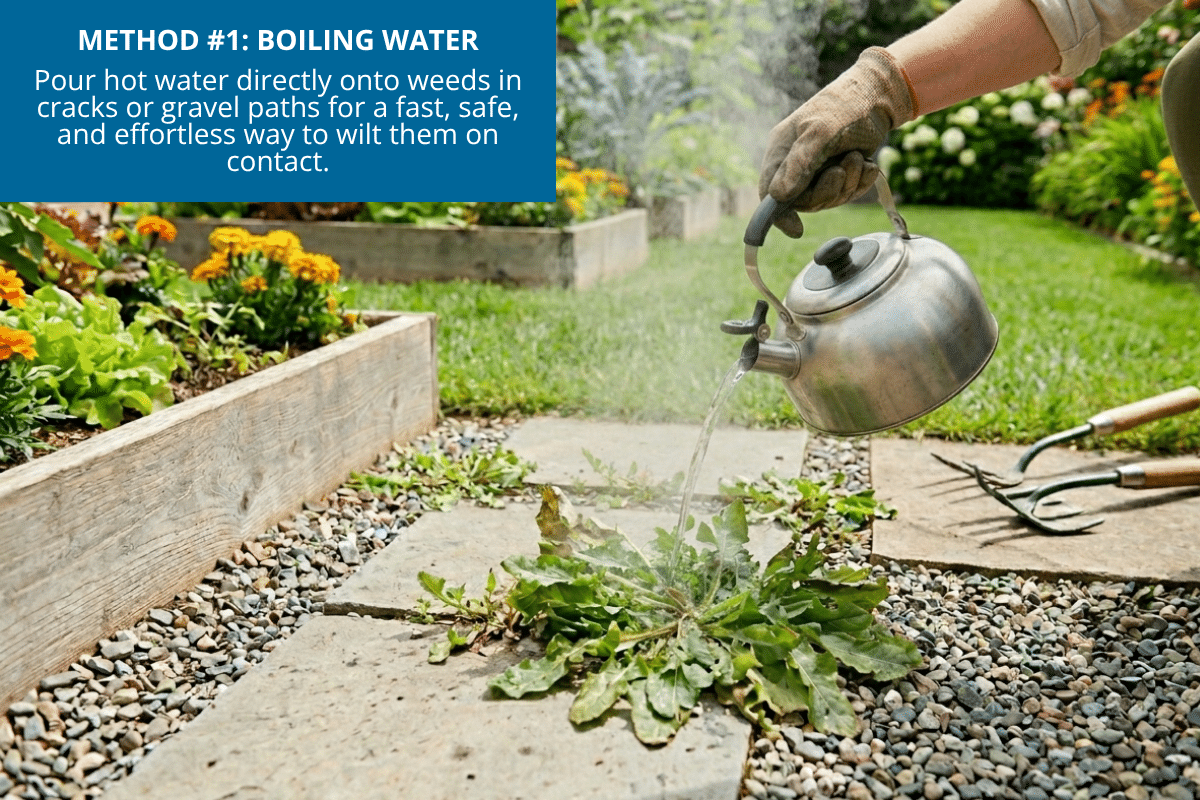
If you’ve ever poured hot water down a drain, you already know how simple this is. Forget the fancy spray bottle. Grab your kettle.
How to use:
- Carefully pour freshly boiled water directly onto weeds.
- Aim for the base of the plant.
The heat destroys plant cells on contact, killing most shallow-rooted weeds almost instantly. It’s one of the quickest wins you can get. No mixing, no cost, no trip to the store.
2. Homemade Vinegar Weed Killer (Stronger Than You Think)
Best for: Driveways, patios, fence lines, and stubborn weeds in non-garden areas*
*If skipping salt: safe for light use in garden beds with careful targeting
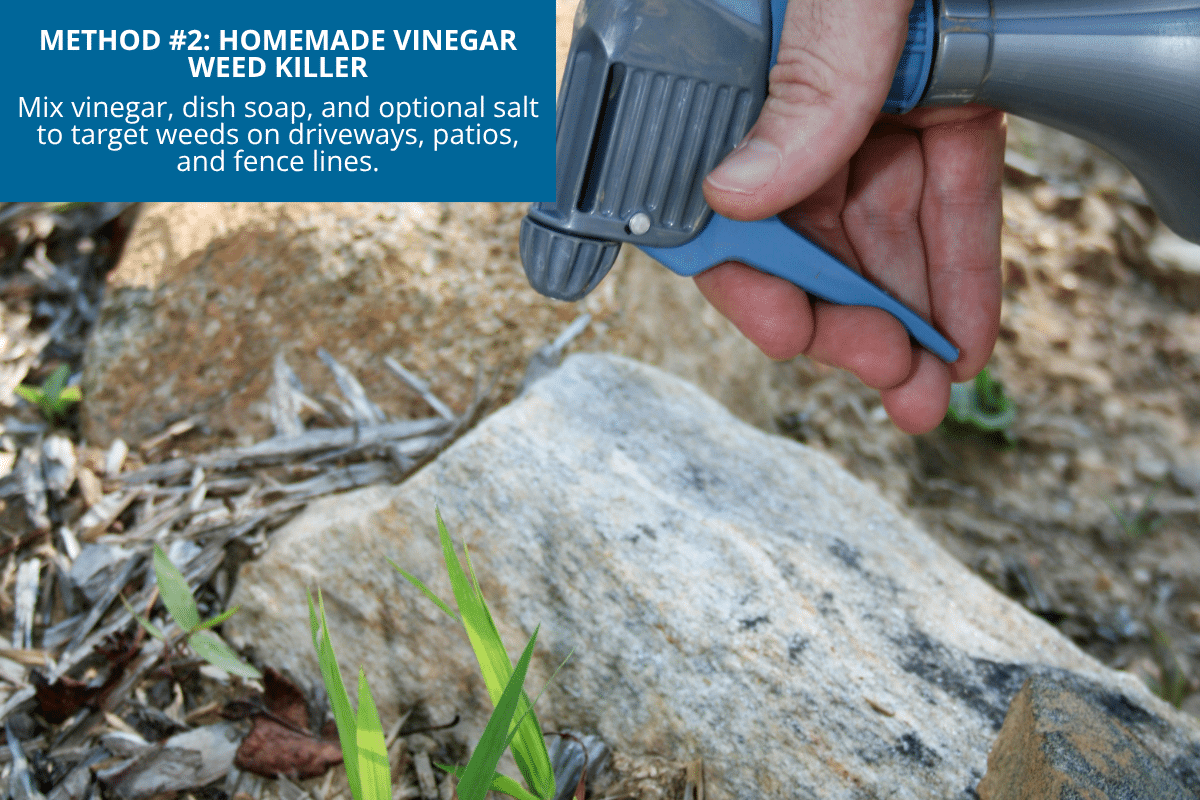
This is the OG of DIY weed killers. It’s strong, effective, and as natural as it gets.
What You’ll Need:
- 1 gallon white vinegar (5% acidity)
- 1 cup table salt (optional; see note below)
- 1 tablespoon dish soap
Mix in a large container, then pour into a spray bottle. Use a funnel and wear gloves if you have sensitive skin.
How to use:
- Spray directly on leaves on a warm, dry day.
- Reapply as needed for stubborn weeds.
Vinegar dries out the leaves, and the soap helps it stick instead of rolling off.
Pro Tip: This DIY weed killer is non-selective. It will harm any plant it touches, so aim carefully. Skip the salt in garden beds. It can build up in soil over time. Save the salt version for cracks, driveways, and areas where nothing should grow.


3. Cardboard + Mulch: The “Set It and Forget It” Method
Best for: Garden beds, landscaping areas, around trees and shrubs, and any spot you’re tired of re-weeding every few weeks
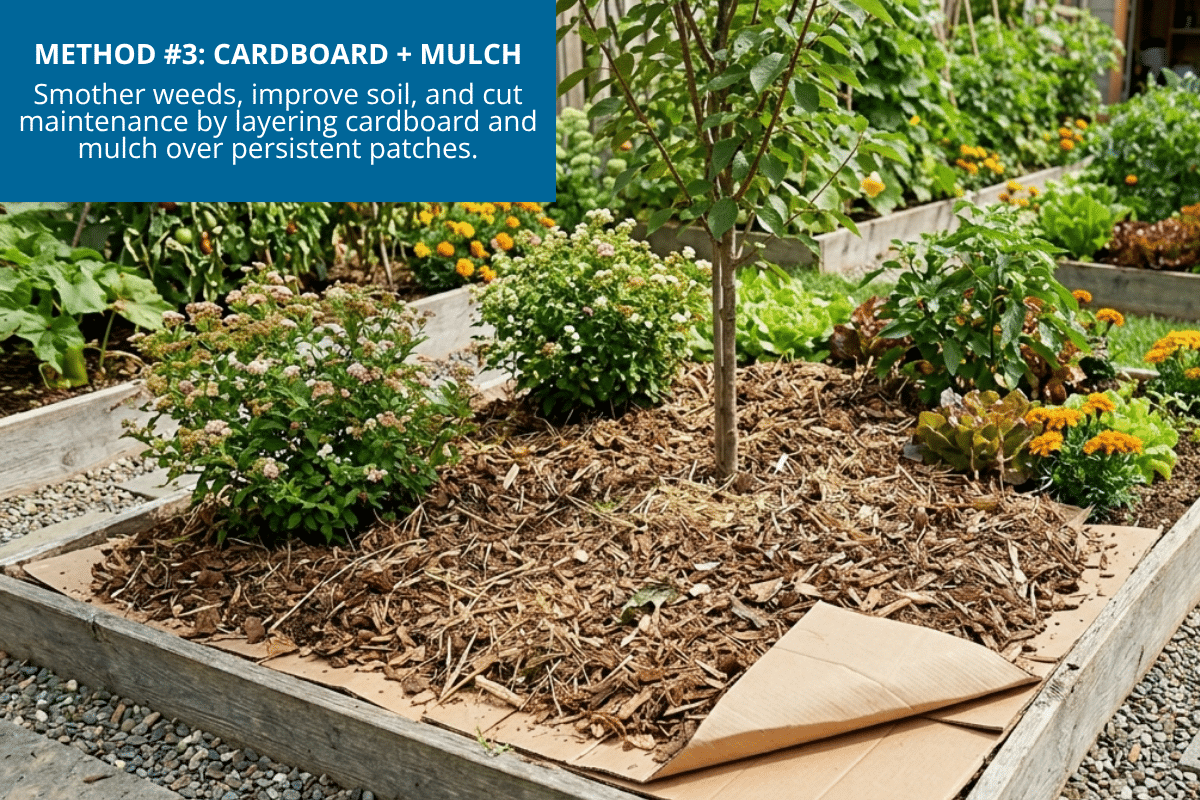
If you’re tired of fighting the same patch over and over, this is your long-term fix.
How to use:
- Lay down cardboard or thick newspaper over weeds.
- Overlap edges so nothing sneaks through.
- Add 2–4 inches of mulch (wood chips, straw, shredded leaves) on top.
This blocks sunlight completely, which weeds can’t survive without. As a bonus, this method also improves soil as it breaks down, uses materials you probably already have, and cuts weeding time dramatically over the season.
4. Corn Gluten Meal: Stop Weeds Before They Start
Best for: Lawns, large open areas, and spots where weeds tend to return season after season
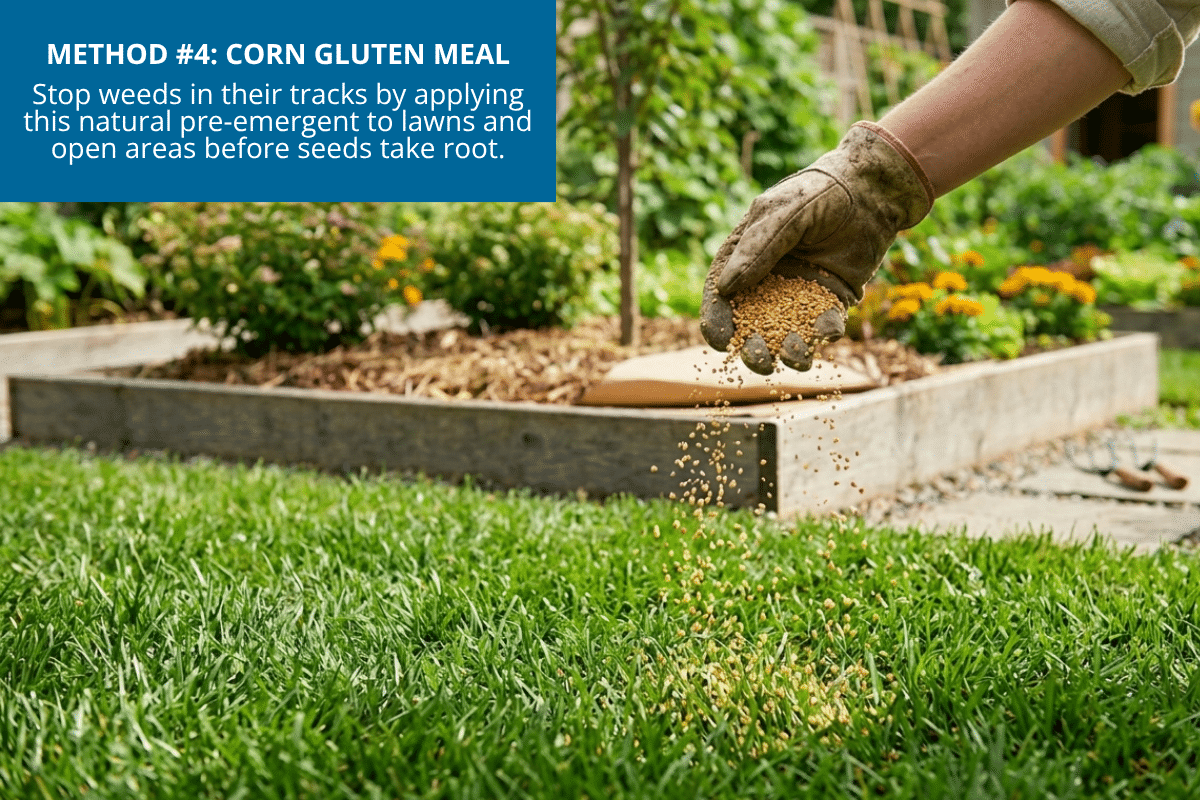
Think of this as prevention instead of cleanup.
How to use:
- Apply in early spring or fall before weeds sprout.
- Lightly water after spreading.
Corn gluten meal, a high-protein byproduct of the corn wet-milling process, prevents seeds from forming roots (so weeds never get going). It affects all seeds, so don’t use it right before planting flowers or vegetables. A 25 pound bag treats up to 1,250 square feet.

3 Best Inexpensive Tools That Make Weeding Easier
Hand weeding isn’t everyone’s idea of a good time. But with the right tools, it becomes a satisfying part of your gardening ritual.
1. Grampa’s Weeder: The Original Stand-Up Weed Puller
Best for: Deep-rooted weeds like dandelions, thistles, and crabgrass, especially if you want to avoid bending or kneeling
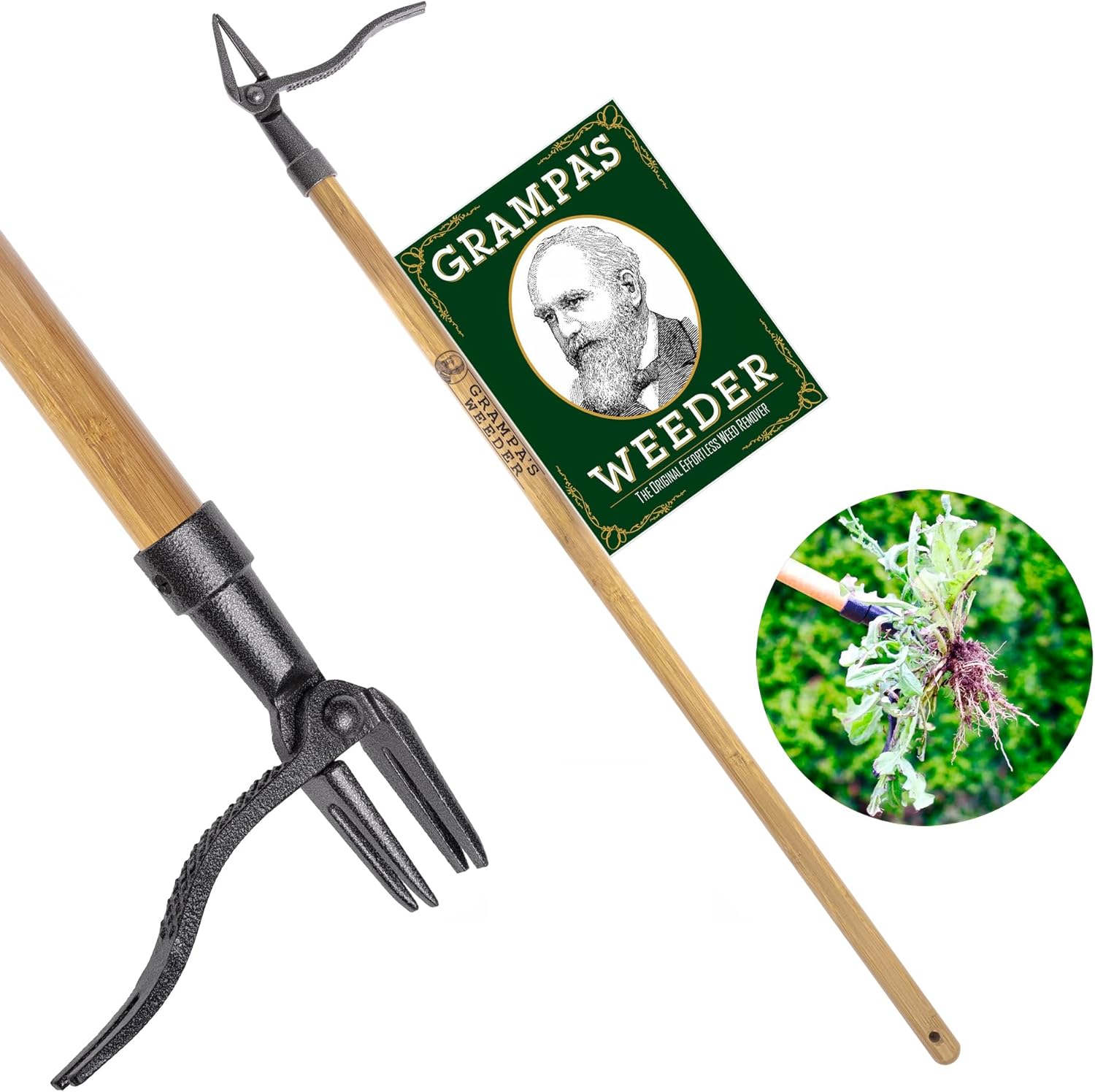
Grampa’s Weeder – The Original Stand Up Weed Puller
Sometimes the right tool is the difference between a 5-minute job and putting it off all weekend.
How to Use:
- Place the claw directly over the middle of the weed.
- Press the footpad straight into the ground so the prongs grab below the root.
- Gently tilt the handle toward the footpad. This is what clamps onto the root and pulls it free.
- Pull the tool back upright to release the weed. Then head to the next one.
There’s a reason this design has been around for over a century. It just works. Once you get the hang of it, you can clear a patch in minutes without feeling it in your back later. Plus, it’s oddly satisfying to use… like popping bubble wrap, but for weeds.

2. Hula Hoe (Quick and Efficient for Large Areas)
Best for: Vegetable gardens, flower beds, and covering large areas of loose soil quickly
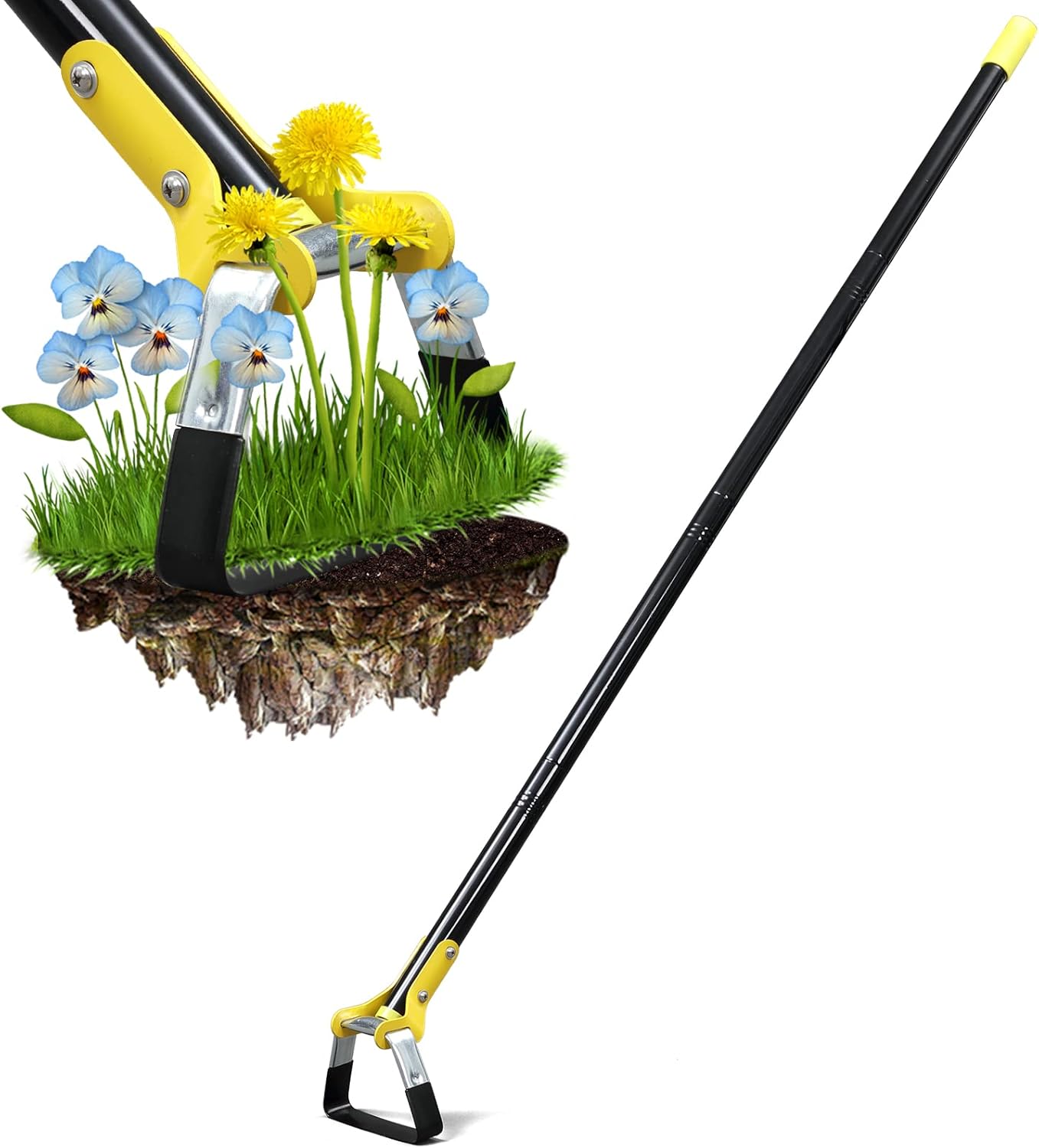
Heavy Duty Garden Hoe
Sometimes weeds don’t show up one at a time. They show up like they’ve invited friends. That’s where this tool really shines.
How to Use:
- Hold the hoe so the blade rests just under the soil surface.
- Use a smooth push-and-pull motion to slice through weeds at the root.
- Work in rows, letting the blade glide just beneath the soil.
- Let the cut weeds dry out on the surface. No need to pull each one.
This tool is all about efficiency. Instead of tugging weeds one by one, you’re clearing entire sections in minutes with a simple back-and-forth motion. It’s easy on your body, surprisingly fast, and once you find your rhythm, it almost feels like mowing… just a lot quieter.
Pro Tip: This works best on small weeds before they get established. A quick pass every week can save you hours later. Sharpen the blade with a file now and then for better slicing.

3. Flame Weeder (For Fast Results… With Caution)
Best for: Gravel driveways, cracks, and hardscapes where fast, chemical-free clearing is the goal
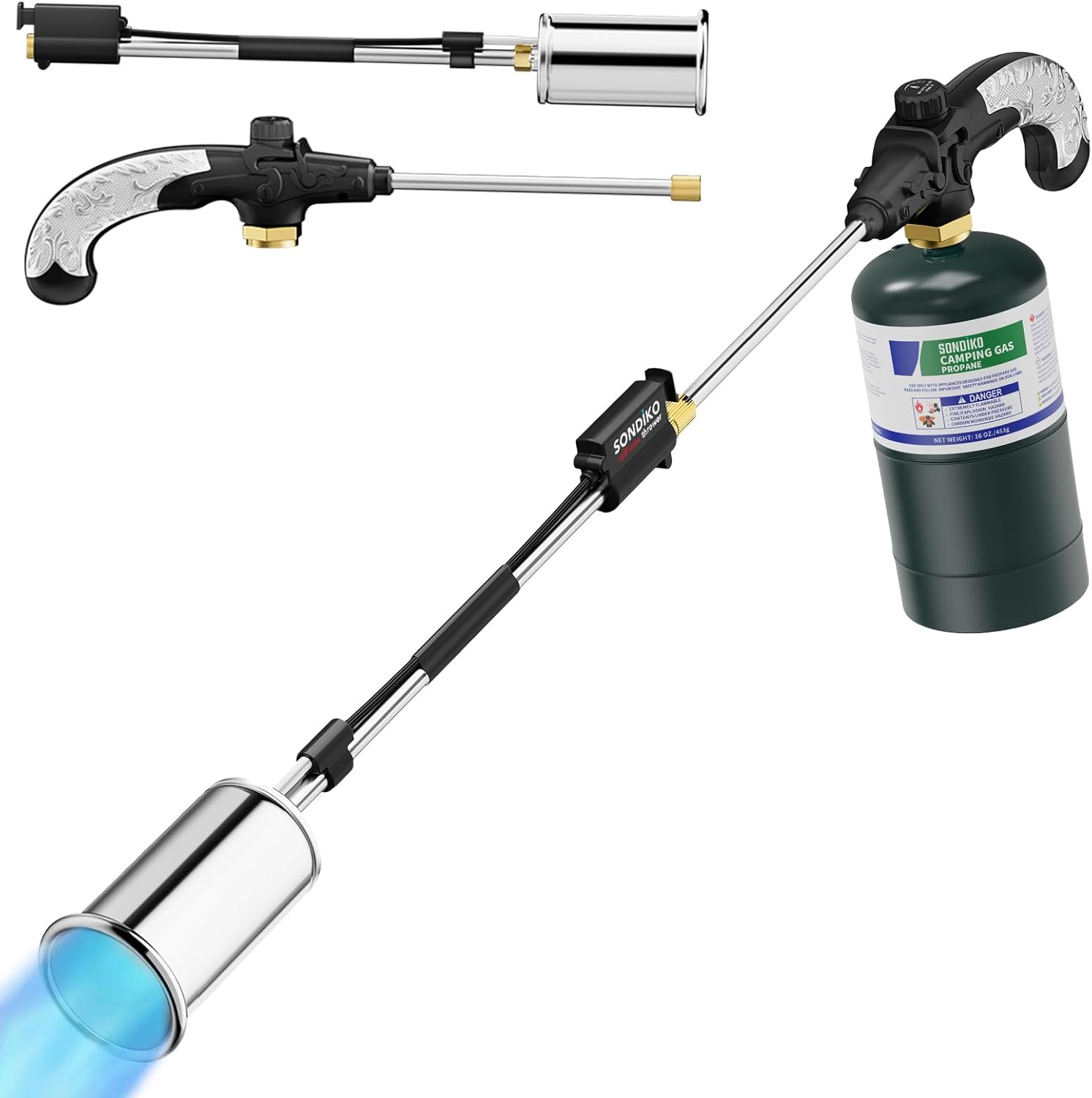
Sondiko Propane Torch Weed Burner
Sometimes you just want the job done now. This is about as fast as it gets.
How to Use:
- Turn on the propane and ignite the torch according to the instructions.
- Pass the flame slowly over the weed for a few seconds. No need to burn it to ash.
- Move steadily across the area, letting the heat do the work.
- Check back in a day or two. The weeds will wilt and die off.
This method doesn’t “burn up” weeds so much as it damages their cells so they can’t recover. It’s quick, effective, and satisfying, especially on those stubborn cracks where nothing else seems to work.
Safety Tip: Use only on calm days and keep well away from dry grass, mulch, or anything flammable. A little caution here goes a long way.

Even More Weed Control Tricks
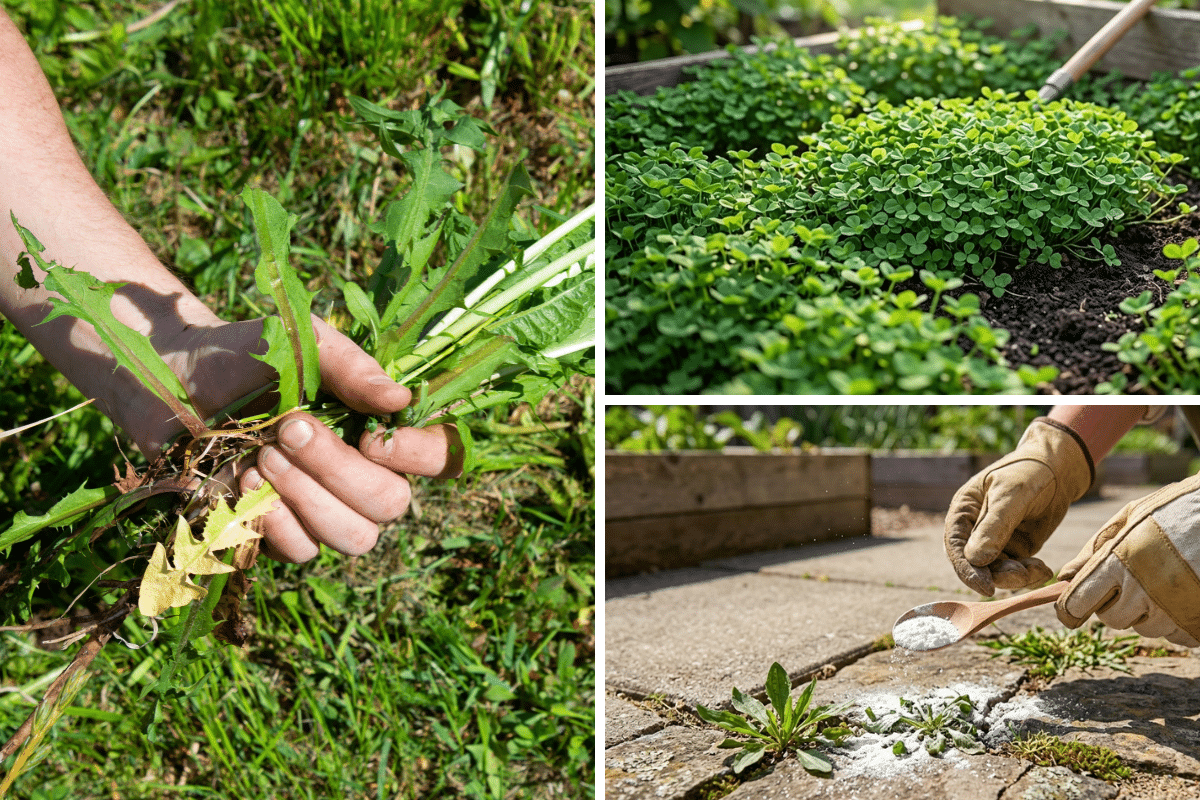
1. Hand Pulling After Rain
Best for: Small areas, precision weeding, and removing weeds completely (roots and all)
Wet soil is your best friend here. After a good rain (or even a deep watering), roots loosen their grip and slide out much more easily. You’re removing the entire root, which means fewer repeat offenders popping back up a week later.
Pro Tip: Grab weeds early, before they go to seed. A few minutes now saves a lot more later.
2. Cover Crops (Nature Does the Work for You)
Best for: Garden beds during the off-season and improving soil while crowding out weeds
Instead of leaving soil bare, plant fast-growing crops like clover, rye, or buckwheat between growing seasons. These plants act like a living mulch, blocking sunlight so weeds can’t get established, while also improving your soil as they grow.
When turned back into the soil, they add nutrients and organic matter for your next planting.
3. Baking Soda for Cracks and Crevices
Best for: Sidewalk cracks, patios, and between pavers (not for soil you plan to plant)
For those stubborn little weeds that show up where nothing else should grow, baking soda is a simple fix. It creates an alkaline environment that weeds don’t tolerate well.
Pro Tip: Apply on a dry day and keep it contained to hard surfaces. This isn’t one for garden beds.
Layer Your Methods for Long-Term Results
The most successful weed control comes from combining strategies. Think of it as your Weed Defense Stack:
- Knock out what’s already there (boiling water or vinegar)
- Block what wants to come back (cardboard + mulch)
- Prevent what hasn’t shown up yet (corn gluten meal)
- Stay ahead with quick touch-ups (weeder or hula hoe)
- Fill in empty space so weeds don’t have room to move in
It’s less about working harder and more about working smarter. A few minutes here and there beats a full weekend of catch-up every time.
You Don’t Need Toxic to Be Tough on Weeds
Weeds are persistent, but so are you. With a few homemade concoctions, some clever tools, and maybe a little muttering under your breath, you can keep your garden tidy using organic weed control methods without risking your health… or your retirement fund.
So pour the vinegar, fire up the kettle, grab Grampa’s Weeder, and take back your yard the frugal, organic, non-toxic way. Your garden (and your knees) will thank you.
Frequently Asked Questions
Are these methods safe for pets and kids?
Yes... with a little common sense. Let sprayed areas dry before letting pets back out, and avoid direct contact during application.
Will vinegar and salt damage my soil?
Vinegar breaks down quickly, but salt can build up. Use salt only in areas where you don’t plan to grow anything.
What’s the fastest way to clear a large area?
Use a hula hoe to clear surface weeds, then cover with cardboard and mulch. For quick knockdown, a flame weeder can speed things up safely when used correctly.
Question: What’s the one weed that keeps coming back no matter what you do? Share your garden woes in the comments below.
EverydayCheapskate™ is reader-supported. We participate in the Amazon Services LLC Associates Program and other affiliate advertising programs, designed to provide a means for us to earn from qualifying purchases, at no cost to you.

More from Everyday Cheapskate
 https://www.everydaycheapskate.com/wp-content/uploads/20260507-thermometer-with-blue-sky-100-degrees-summer-kitchen-odor-prevention-habit.png
800
1200
Mary Hunt
https://www.everydaycheapskate.com/wp-content/uploads/EC-Logo-by-Mary-Hunt-Tagline-Trimmed.png
Mary Hunt2026-05-07 13:35:362026-05-07 13:35:40The One Cleaning Habit That Keeps Summer Smells From Taking Over
https://www.everydaycheapskate.com/wp-content/uploads/20260507-thermometer-with-blue-sky-100-degrees-summer-kitchen-odor-prevention-habit.png
800
1200
Mary Hunt
https://www.everydaycheapskate.com/wp-content/uploads/EC-Logo-by-Mary-Hunt-Tagline-Trimmed.png
Mary Hunt2026-05-07 13:35:362026-05-07 13:35:40The One Cleaning Habit That Keeps Summer Smells From Taking Over https://www.everydaycheapskate.com/wp-content/uploads/20260506-dishwasher-not-cleaning-properly-reasons-hard-water-temperature-detergent-rinse-aid.png
800
1200
Mary Hunt
https://www.everydaycheapskate.com/wp-content/uploads/EC-Logo-by-Mary-Hunt-Tagline-Trimmed.png
Mary Hunt2026-05-06 12:32:212026-05-06 12:34:0910 Reasons Your Dishwasher Is Not Cleaning Properly
https://www.everydaycheapskate.com/wp-content/uploads/20260506-dishwasher-not-cleaning-properly-reasons-hard-water-temperature-detergent-rinse-aid.png
800
1200
Mary Hunt
https://www.everydaycheapskate.com/wp-content/uploads/EC-Logo-by-Mary-Hunt-Tagline-Trimmed.png
Mary Hunt2026-05-06 12:32:212026-05-06 12:34:0910 Reasons Your Dishwasher Is Not Cleaning Properly https://www.everydaycheapskate.com/wp-content/uploads/20260505-budget-friendly-home-improvements-to-increase-sales-price.png
800
1200
Mary Hunt
https://www.everydaycheapskate.com/wp-content/uploads/EC-Logo-by-Mary-Hunt-Tagline-Trimmed.png
Mary Hunt2026-05-05 21:38:292026-05-05 21:40:21Before You List: 12 Easy Wins to Boost Your Sale Price
https://www.everydaycheapskate.com/wp-content/uploads/20260505-budget-friendly-home-improvements-to-increase-sales-price.png
800
1200
Mary Hunt
https://www.everydaycheapskate.com/wp-content/uploads/EC-Logo-by-Mary-Hunt-Tagline-Trimmed.png
Mary Hunt2026-05-05 21:38:292026-05-05 21:40:21Before You List: 12 Easy Wins to Boost Your Sale Price https://www.everydaycheapskate.com/wp-content/uploads/20260503-give-mom-a-day-off-mother-and-son-in-park-at-golden-hour-sunset.png
800
1200
Mary Hunt
https://www.everydaycheapskate.com/wp-content/uploads/EC-Logo-by-Mary-Hunt-Tagline-Trimmed.png
Mary Hunt2026-05-03 13:13:212026-05-03 13:13:23How to Give Mom a Day Off… Without It Falling Apart by Noon
https://www.everydaycheapskate.com/wp-content/uploads/20260503-give-mom-a-day-off-mother-and-son-in-park-at-golden-hour-sunset.png
800
1200
Mary Hunt
https://www.everydaycheapskate.com/wp-content/uploads/EC-Logo-by-Mary-Hunt-Tagline-Trimmed.png
Mary Hunt2026-05-03 13:13:212026-05-03 13:13:23How to Give Mom a Day Off… Without It Falling Apart by Noon https://www.everydaycheapskate.com/wp-content/uploads/20260502-memorial-day-on-a-budget-flag-in-sunlight-golden-hour.png
800
1200
Mary Hunt
https://www.everydaycheapskate.com/wp-content/uploads/EC-Logo-by-Mary-Hunt-Tagline-Trimmed.png
Mary Hunt2026-05-02 16:09:472026-05-02 16:09:49Memorial Day on a Budget: Simple Ways to Save Big
https://www.everydaycheapskate.com/wp-content/uploads/20260502-memorial-day-on-a-budget-flag-in-sunlight-golden-hour.png
800
1200
Mary Hunt
https://www.everydaycheapskate.com/wp-content/uploads/EC-Logo-by-Mary-Hunt-Tagline-Trimmed.png
Mary Hunt2026-05-02 16:09:472026-05-02 16:09:49Memorial Day on a Budget: Simple Ways to Save Big https://www.everydaycheapskate.com/wp-content/uploads/20260501-borrowing-from-your-retirement-account-piggy-bank-and-wood-cutout-of-retired-couple.png
800
1200
Mary Hunt
https://www.everydaycheapskate.com/wp-content/uploads/EC-Logo-by-Mary-Hunt-Tagline-Trimmed.png
Mary Hunt2026-05-01 10:00:032026-05-01 10:01:39Why Borrowing From 401(k)s Backfires More Than You Think
https://www.everydaycheapskate.com/wp-content/uploads/20260501-borrowing-from-your-retirement-account-piggy-bank-and-wood-cutout-of-retired-couple.png
800
1200
Mary Hunt
https://www.everydaycheapskate.com/wp-content/uploads/EC-Logo-by-Mary-Hunt-Tagline-Trimmed.png
Mary Hunt2026-05-01 10:00:032026-05-01 10:01:39Why Borrowing From 401(k)s Backfires More Than You Think https://www.everydaycheapskate.com/wp-content/uploads/20260428-toilet-with-roses-coming-out.png
800
1200
Mary Hunt
https://www.everydaycheapskate.com/wp-content/uploads/EC-Logo-by-Mary-Hunt-Tagline-Trimmed.png
Mary Hunt2026-04-28 22:00:202026-04-28 22:02:21DIY Poo-Pourri Spray That Works (For Pennies, Not Dollars)
https://www.everydaycheapskate.com/wp-content/uploads/20260428-toilet-with-roses-coming-out.png
800
1200
Mary Hunt
https://www.everydaycheapskate.com/wp-content/uploads/EC-Logo-by-Mary-Hunt-Tagline-Trimmed.png
Mary Hunt2026-04-28 22:00:202026-04-28 22:02:21DIY Poo-Pourri Spray That Works (For Pennies, Not Dollars) https://www.everydaycheapskate.com/wp-content/uploads/20260428-uses-for-used-coffee-grounds-in-the-kitchen-garden.png
800
1200
Mary Hunt
https://www.everydaycheapskate.com/wp-content/uploads/EC-Logo-by-Mary-Hunt-Tagline-Trimmed.png
Mary Hunt2026-04-28 11:09:252026-04-28 11:11:5616 Used Coffee Grounds Uses You’ll Wish You Knew Sooner
https://www.everydaycheapskate.com/wp-content/uploads/20260428-uses-for-used-coffee-grounds-in-the-kitchen-garden.png
800
1200
Mary Hunt
https://www.everydaycheapskate.com/wp-content/uploads/EC-Logo-by-Mary-Hunt-Tagline-Trimmed.png
Mary Hunt2026-04-28 11:09:252026-04-28 11:11:5616 Used Coffee Grounds Uses You’ll Wish You Knew Sooner https://www.everydaycheapskate.com/wp-content/uploads/20260427-generic-vs-name-brand-woman-choosing-between-two-cereals-in-grocery-store-aisle.png
800
1200
Mary Hunt
https://www.everydaycheapskate.com/wp-content/uploads/EC-Logo-by-Mary-Hunt-Tagline-Trimmed.png
Mary Hunt2026-04-27 21:01:172026-04-27 21:03:216 Winners in the Generic vs. Name-Brand Showdown
https://www.everydaycheapskate.com/wp-content/uploads/20260427-generic-vs-name-brand-woman-choosing-between-two-cereals-in-grocery-store-aisle.png
800
1200
Mary Hunt
https://www.everydaycheapskate.com/wp-content/uploads/EC-Logo-by-Mary-Hunt-Tagline-Trimmed.png
Mary Hunt2026-04-27 21:01:172026-04-27 21:03:216 Winners in the Generic vs. Name-Brand ShowdownPlease keep your comments positive, encouraging, helpful, brief,
and on-topic in keeping with EC Commenting Guidelines
Last update on 2026-05-09 / Affiliate links / Images from Amazon Product Advertising API


Hello Mary,
Thanks for this interesting article. I wanted to mention that for cracks and crevices you mention baking soda and while I’m sure that works great, pool salt is cheaper in our area and works great! That is what we use all the time for our paver driveway. Thanks again, Mary. Love ya!
grass. it’s too high maintenance. where i live it’s very rocky so a ‘lush green lawn’ is out of the question. it only grows in small clumps and looks untidy.
Creeping Charlie and Yellow Nutsedge. How do I overcome these?
Regarding salt….Epsom salt is a better choice than table salt. It is magnesium and can be beneficial to the soil and surrounding plants rather than toxic like table salt.